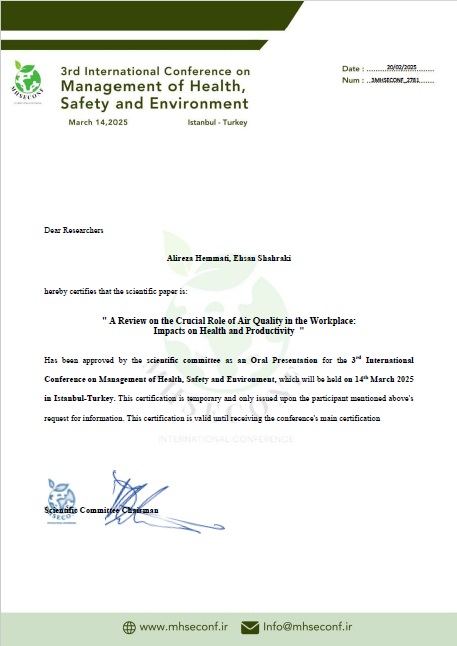
A Review on the Crucial Role of Air Quality in the Workplace: Impacts on Health and Productivity
Abstract. Air quality is a vital factor influencing human health, with significant implications for physical and mental well-being. In workplaces, maintaining good air quality is essential for ensuring employee productivity, reducing absenteeism, and fostering a safe environment. Poor air quality, whether indoors or outdoors, can lead to a range of adverse health effects, from mild discomfort to severe chronic conditions, impacting both individuals and organizations through increased healthcare costs, reduced productivity, and higher absenteeism. Employees often spend a substantial portion of their day in enclosed spaces, where exposure to indoor pollutants, such as volatile organic compounds (VOCs) from office equipment, cleaning products, and building materials, can be more concentrated than outdoor levels. Simultaneously, outdoor air pollution infiltrates workplaces, exposing employees to harmful particulate matter (PM), nitrogen dioxide (NO₂), and other pollutants. This dual exposure highlights the need for comprehensive strategies to address both indoor and outdoor air quality concerns. The economic burden of poor air quality extends beyond health impacts, with air pollution-related illnesses resulting in significant healthcare costs and lost productivity due to absenteeism and presenteeism. This review examines the types of air pollutants, their short- and long-term health effects, workplace-specific factors, and the economic and productivity impacts of poor air quality. It also explores potential mitigation strategies organizations can adopt to enhance air quality and protect employee health. Understanding these dynamics is crucial for creating healthier work environments that support both individual well-being and organizational success. Keywords: Air Quality, Employee Health, Workplace Productivity, Indoor Pollutants
Alireza Hemmati , Ehsan Shahraki